This preview blends probability modelling, form indicators, and situational analysis to deliver a clear T20 2026 match prediction.
- Match: India vs New Zealand
- Tournament: T20 World Cup 2026
- Format: Men’s T20I
Win Probability – Scenario-Based Outlook
| Scenario | India | New Zealand |
| India bat first | 74% | 26% |
| New Zealand bat first | 77% | 23% |
In both the scenarios, there are more chances of India winning.
Expected First Innings Score
| Metric | Projection |
| Par score range | 200-210 runs |
The pitch looks good for batting, especially under lights. Teams batting first should aim for at least 200+ to feel safe. Anything below that could be risky.
Expected First Innings Wickets
| Metric | Prediction |
| Likely wicket | 5-6 wicket |
The expected range of first innings wickets in the match is approximately 5 to 6 wickets.
Top Batters to Watch (30+ Runs Probability)
| Player | Team | Chance |
| Abhishek Sharma | Ind | 42.86% |
| Surya Kumar Yadav | Ind | 41.91% |
| Tim Seifert | Ind | 39.02% |
Batting Insights
Abhishek Sharma (India)
Abhishek has had a bit of a “boom or bust” tournament. While he is known for his explosive power at the top of the order, he enters the final on the back of a difficult run, including three ducks in the early stages and a low score of 9 in the semi-final.
Despite the struggle for consistency, the team management seems likely to back him. His “all-or-nothing” approach is high-risk, but if he survives the first two overs, he has the potential to take the game away from the Kiwis single-handedly. Keep an eye on his battle against the moving ball early on.
Suryakumar Yadav (India)
The Indian captain has been the glue for the middle order, even if he hasn’t been at his “prime” destructive self lately. Outside of a match-winning 84 against the USA, Surya has focused more on crucial cameos and stabilizing the innings when wickets fell early.
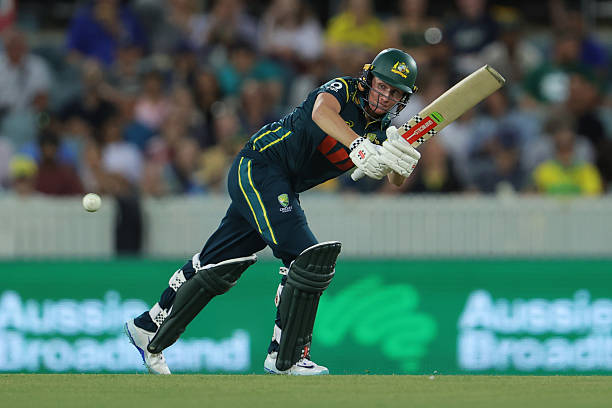
Interestingly, there are whispers that this could be his final T20I appearance, as reports suggest he may consider retirement after this tournament. Facing a New Zealand side he has historically performed well against, expect “SKY” to bring out his trademark 360-degree shots to disrupt the Black Caps’ disciplined bowling lines.
Tim Seifert (New Zealand)
Seifert is arguably the most in-form batter on this list. He has been a pillar for New Zealand throughout this World Cup, amassing 274 runs at a strike rate of 161.17. His match-winning 58 in the semi-final against South Africa proved he can handle the pressure of the knockout stages.
He has a solid record against India, averaging over 32 in T20Is against them. As an opener, his job will be to dismantle the Indian powerplay bowlers. If Seifert gets going, he provides the perfect platform for the Kiwis to post or chase a massive total.
Top Bowlers – Likely Impact (2+ Wickets)
| Player | Team | Chance |
| Varun Chakaravarthy | Ind | 54.76% |
| Arshdeep Singh | Ind | 47.56% |
| Matt Henry | NZ | 43.24% |
Bowling Insights
Varun Chakaravarthy (India)
The “Mystery Spinner” is currently India’s biggest selection headache. While he is the team’s highest wicket-taker in the tournament with 13 wickets, his form has dipped drastically at the worst possible time.
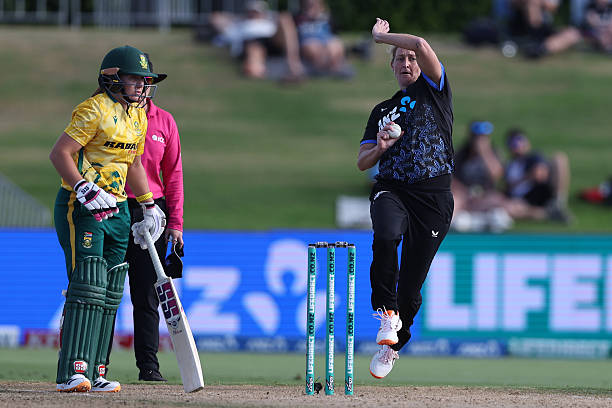
In the semifinal against England, he conceded a staggering 64 runs in his 4 overs—the most expensive spell by an Indian in T20 World Cup history. Critics note he has been bowling too full or too short, losing the “hard length” that makes his pace so difficult to handle. There is heavy speculation that Kuldeep Yadav might replace him for the final to provide more control in the middle overs.
Arshdeep Singh (India)
Arshdeep has established himself as the undisputed leader of India’s pace attack this tournament. He leads the team with 16 wickets and boasts an incredible strike rate.
His value lies in his versatility: he provides lethal left-arm swing in the powerplay and remains calm under pressure at the death. While he has struggled slightly with no-balls and wides recently, his ability to nail yorkers in the final overs was the primary reason India survived the semifinal. Expect him to be the “X-factor” against New Zealand’s top order.
Matt Henry (New Zealand)
Matt Henry continues to be New Zealand’s most reliable “big-game” performer. Heading into the final, he has been in clinical form, recently picking up 2/34 in the semifinal win over South Africa.
Henry is particularly dangerous against India because of his historical success in ICC knockouts. He doesn’t rely on extreme pace but uses a metronomic “in-between” length that exploits any movement in the surface. With 52 career T20I wickets and a sharp tactical mind, he will be the bowler tasked with dismantling India’s explosive opening pair.
Team India: The Defending Champions
The defending champions have focused on keeping their “Golden Core” while adding explosive power to the top and middle order to ensure a high-scoring rate from the first ball.
Top Order & Leadership: Led by Suryakumar Yadav, the batting is anchored by the aggressive Sanju Samson, who has been in scintillating form this tournament. They also have the young sensation Abhishek Sharma, despite recent scrutiny, and the reliable Ishan Kishan providing a left-handed explosive option at the top.
Finishing Power: Hardik Pandya remains one of the best finishers and all-rounders in the world, providing late-inning fireworks. He is supported by Tilak Varma and Shivam Dube, who offer immense power against spin in the middle overs.
Bowling Strength: The pace attack is led by the world-class Jasprit Bumrah and the left-arm swing of Arshdeep Singh. For spin, India relies on the “mystery” factor of Varun Chakaravarthy and the tactical brilliance of Axar Patel, who has been a match-winner in the knockouts.
Team New Zealand: The Black Caps
New Zealand has looked incredibly balanced throughout the tournament, combining calm veteran leadership with some of the most destructive ball-strikers in the modern game.
Top Order & Leadership: Captained by Mitchell Santner, the New Zealand batting relies heavily on the explosive Finn Allen, who recently smashed a century in the tournament. He is paired with the technically sound Devon Conway and the rising superstar Rachin Ravindra.
Middle-Order Versatility: Glenn Phillips is the X-factor for the Kiwis, capable of changing the game with his power-hitting and elite fielding. Daryl Mitchell and Mark Chapman provide the stability needed to navigate the middle overs against India’s spinners.
Bowling Strength: The pace unit is spearheaded by Matt Henry, known for his ability to strike early with the new ball, and the express pace of Lockie Ferguson. Jacob Duffy has also been a revelation this season, while Ish Sodhi provides the essential leg-spin threat on the Ahmedabad surface.
Final Conclusion
From a data-led perspective, while New Zealand’s disciplined bowling and Finn Allen’s explosiveness make them dangerous, India’s home advantage and superior squad depth give them the upper hand.
Expect a high-scoring thriller where India’s experience in handling the pressure of 130,000 fans finally breaks their T20 World Cup losing streak against the Kiwis.
Leave a Reply