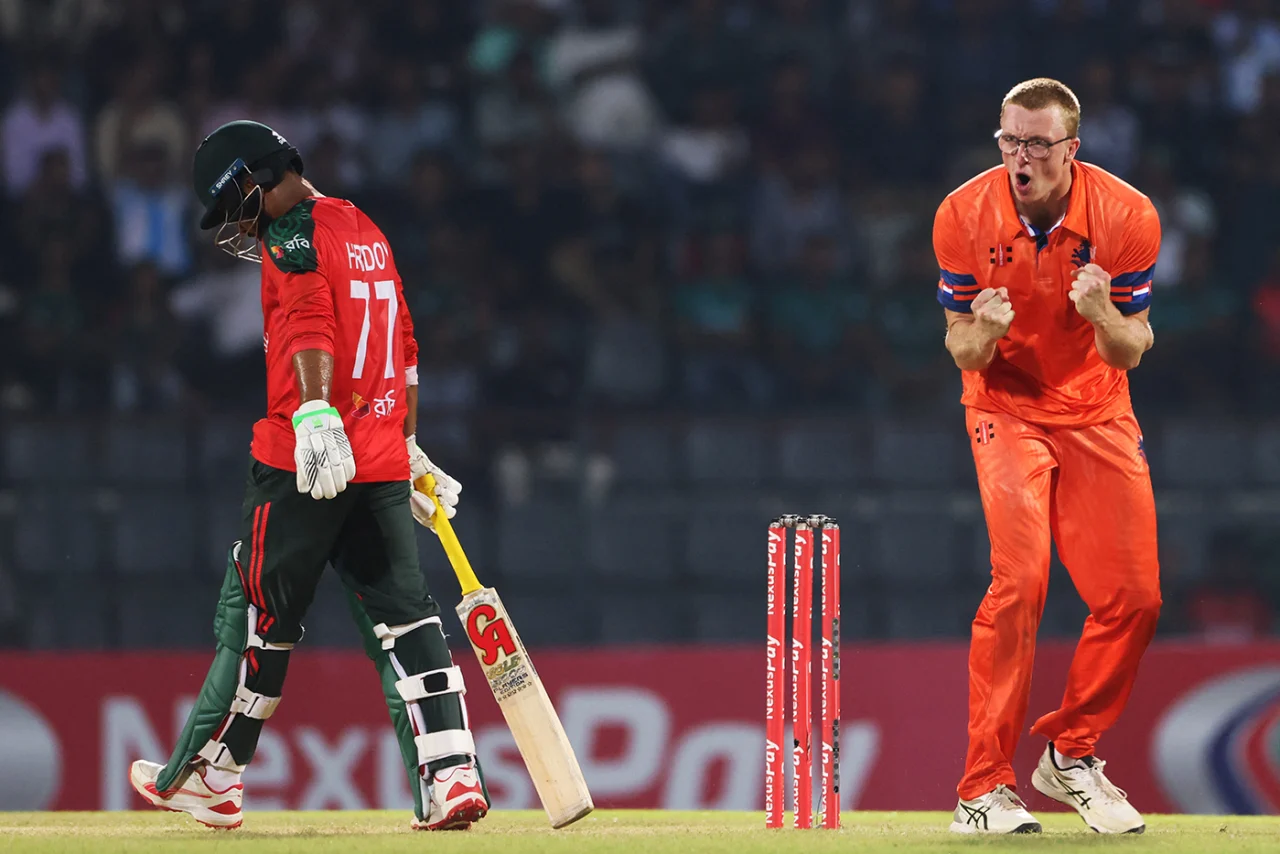
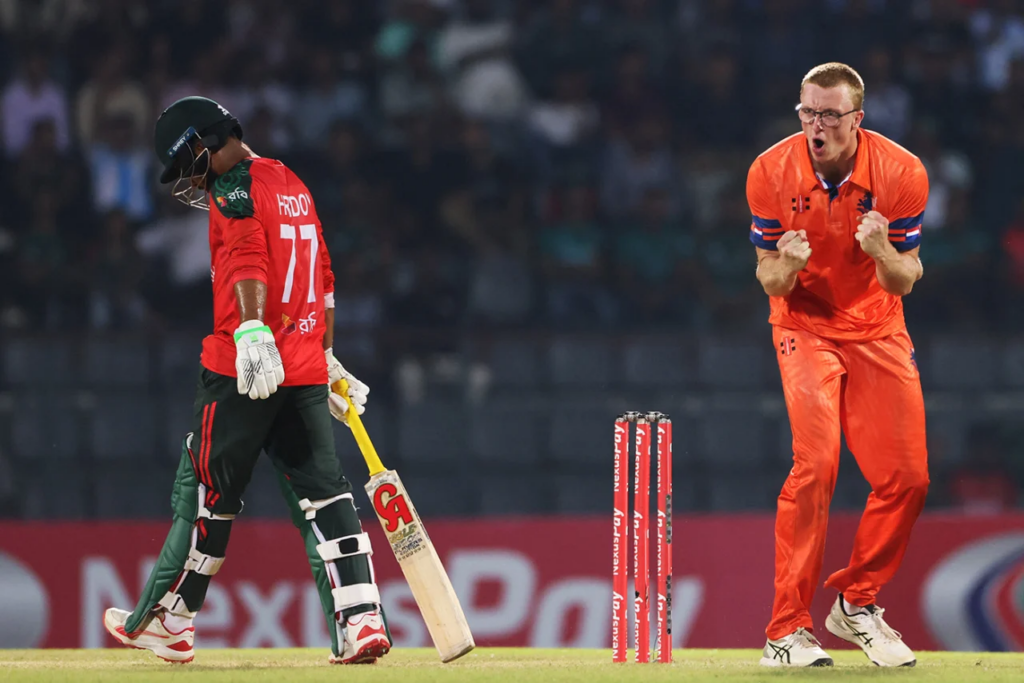
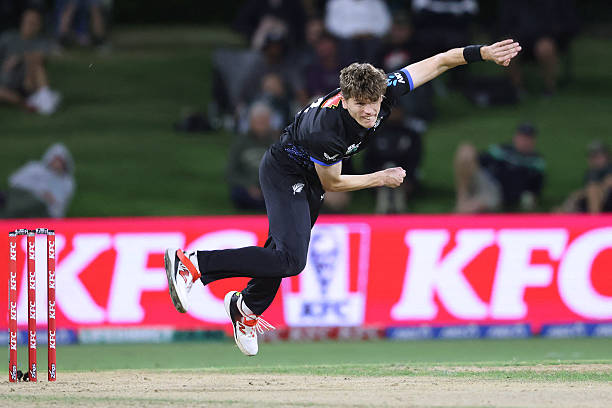
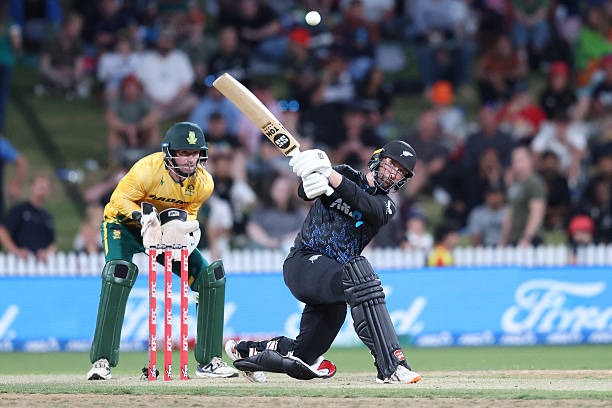
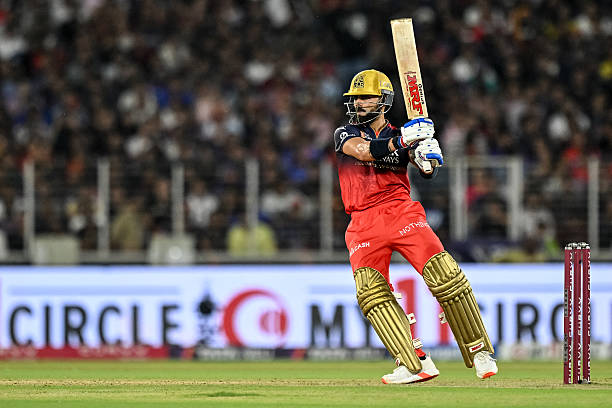
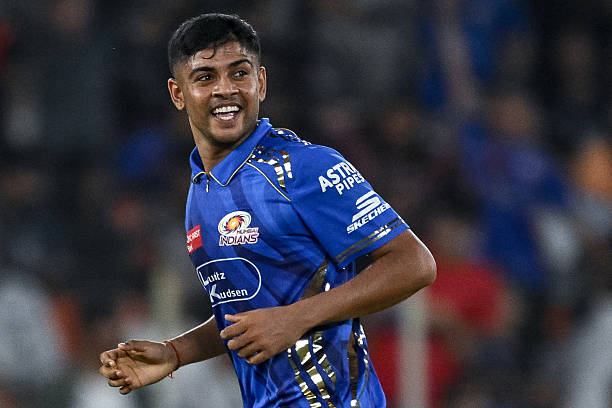
Understanding Tim Pringle career stats gives cricket fans a clear view into the rise of one of Associate cricket’s most reliable left-arm spin all-rounders. Born in The Hague and raised in New Zealand, Pringle carries an international cricket pedigree as the son of former Kiwi pacer Chris Pringle.
Representing the Netherlands national team and top-flight domestic leagues like Northern Districts, Pringle brings control with the ball and depth with the bat. For European cricket enthusiasts and Indian franchise scouts alike, his ability to strangle run rates in the powerplay makes him an indispensable modern T20 asset.
Powerplay Weapon: European pitches often aid seam early on, but Pringle’s arm-ball and flat trajectory allow teams to open the bowling with spin, cutting boundary scoring.
Haagsche Cricket Club (HCC) Anchor: In Dutch club and T20 cricket, he anchors the middle overs, frequently producing economy rates under 6.00 RPO while batting at numbers 6 or 7.
Tactical Versatility: His left-arm orthodox line creates tough angles against right-handed middle-order hitters, making him the go-to defensive option during European tournaments.
Lower-Order Hitter: Capable of clearing the ropes during death overs, providing necessary balance as a genuine bowling all-rounder.
Tim Pringle Career Stats: Key Records & Important Facts
World Cup Economy: Kept an economy rate under 6.50 during high-pressure ICC T20 World Cup fixtures against major full-member nations.
Dual Cricket Heritage: Eligible for both New Zealand (where he played U19 cricket) and the Netherlands (birthplace).
Career-Best T20I Spell: Claimed a match-winning 3/20 against Nepal during the 2024 ICC T20 World Cup.
First-Class Red-Ball Threat: Took over 50 wickets across 15 matches for Northern Districts and New Zealand A squads.
Current Form & Performance
Pringle remains active on both the international Associate circuit and the Southern Hemisphere domestic calendar:
ICC CWC League 2: Bowled 9 tight overs (1/41) against Namibia in Utrecht during the July 2026 fixture.
First-Class Red-Ball Form: Delivered multi-wicket hauls for New Zealand A against Sri Lanka A and Northern Districts in the Plunket Shield.
T20 Consistency: Continues to average 1.2 wickets per game with an economy hovering around 6.50 in European international assignments.
Frequently Asked Questions
What are Tim Pringle’s career stats in T20 international cricket?
In 22 T20I matches, Tim Pringle has picked up 18 wickets at an economy rate of 6.47 and a bowling average of 25.16, alongside scoring 121 runs with a top score of 35*.
Which team does Tim Pringle play for in domestic cricket?
Pringle represents Northern Districts (Northern Brave) in New Zealand domestic cricket and Haagsche CC in the Netherlands Topklasse competition.
What is Tim Pringle’s bowling style?
He is a slow left-arm orthodox spinner who uses height, flat trajectories, and natural drift.
Who is Tim Pringle’s father?
He is the son of former New Zealand international fast bowler Chris Pringle.
Final Thoughts
Evaluating Tim Pringle career stats demonstrates how tactical discipline and accurate left-arm spin make him a standout match-winner for Dutch cricket. As European T20 setups expand and international franchise leagues scout Associate stars, Pringle’s all-round skills remain a valuable asset to track.
When I was 15 years old I found myself with long hair, an eccentric bowling action that still isn’t an aesthetic delight to this day, and occasionally ball in hand for one of the various Northumberland age-group sides that I eventually elected not to trial for again after the summer of 2023. It was the closest I’ve ever come to some level of recognition in the cricketing universe, dreaming some day of honours on the international stage just as so many lads the same age do.
Here we are a mere three years later and a boy of that same age as me back then (which still feels like yesterday, by the way) has been named in India’s senior squad to tour Ireland and England in Vaibhav Sooryavanshi.
On one level, that just made me feel ancient. But on another, it really got me thinking about how I could never imagine anyone of that age I ever played with at that level anywhere near the full England international squad.
Now, if you’ve ever used Wikipedia, which if anyone says they refuse to do, they are lying, you’ll know what I mean when I speak of a ‘Wikipedia Rabbithole’.
I need to go down one now to try and make some sense of my argument.
One of the first things I saw on the Wikipedia article for cricket was its nickname, The Gentlemen’s Game. At a glance, that describes a game played in good spirit – I must refuse to make this article about the spirit of cricket because there’s just no point – though I’m nerdy enough to have done A-level PE and understand the connotations of such a moniker.
The late Professor Freeman as early as the ninth edition of Encyclopaedia Britannica described an “order of ‘gentlemen’ as a separate class… forming as something new” – in other terms, a demonym reserved for those of high class that conduct themselves by a non-rigid set of societal rules to sustain such a status. Think Anthony in the Bridgerton series.
The ninth edition of Brittanica came out incrementally over a stretch of history that now dates back to up to 151 years ago, only after the first Industrial Revolution was a thing of the past. Paper 3 content on OCR A-level PE did a good job, at least for me, of picking apart the class system’s impact on cricket from just after the medieval period, through both British Industrial Revolutions, the 20th century and into the modern day.
151 years ago was just over 20 years into the Second Revolution. A time where factories opened up literally everywhere and started enlisting their players to play professional sport to keep workers fit and healthy and boost morale.
The most prominent example of this is of course football, with factories such as that in Newton Heath (eventually Manchester United) being the roots of modern-day titans of the game. Cricket was no exemption to this, and many early County Championship players were previously factory workers, as well as coal miners and farmers. The Revolution practically invented professional sport in the United Kingdom as common practice.
But prior to about 1850, being paid to play a child’s game in the eyes of these ‘gentlemen’ was at best looked down upon and at worst seen as societal unworthiness manifest.
The game of cricket during this period and well before was dominated by the class that could afford travel to and from games, kit, and the like. So not the serfs of the mid-16th century when cricket was first referenced definitively in the South East of England.
Those of a working class who did play cricket had to wash the gentlemen’s kit and were generally restricted to being what club cricketers nowadays call being “fresh-aired” – not batting or bowling for an entire game. Happened to Adil Rashid in a Test match against India back in 2018, bless him.
What else was happening from the mid-16th century onwards to within the lifetimes of many people still alive today, I hear you ask?
The, uh, Sizeable Portion of Planet Earth Claimed By The United Kingdom In That Period?
The British Empire.
These gentlemen introduced cricket to wherever the British went, particularly the West Indies, South Asia, Oceania, and the southern tip of Africa. In keeping with trends seen in other sports, these teams ended up beating the British at their own damn game.
Let me go back to Vaibhav Sooryavanshi. This ACTUAL CHILD took one look at the greatest Indian fast bowler of all time (move aside Kapil Dev) in Jasprit Bumrah and launched him for six over the leg side without even moving his feet. How utterly ridiculous is that?
Could 15-year-old me have done that? Hell no!
Could any 15-year-old that I’ve played with or against at any level of English cricket do that?
*insert any word worse than hell here* no!!
Why is this, I found myself asking on Sunday afternoon?
Now, one thing is the sheer amount of people in India. I’ve been, and it’s A LOT of people. Everywhere and wherever one goes. In a country full of so many people with a desire to master the game of cricket, this remarkable ability at an age where one can’t buy a can of Monster from Tesco is perhaps inevitable at some point in history through simple law of averages.
Another is the removal of gentlemen from the picture.
Ah, the so-called spirit of cricket that I said I wasn’t going to write about, a set of unwritten rules that are actually written and have been the subject of much conflict between and within entire cricketing nations as far back as their official (but yet unofficial) codification. For me, this abstract philosophy is all to do with the perception of the game as in keeping with gentlemens’ own un/official codes of honour.
After all, it’s their own game, apparently.
The idea of the word ‘gentleman’ as defining its own position on the ladder of British society reflects discourses between those that introduced cricket to places such as India and those that took it up in wake of that; the oppressor and the oppressed, in many instances.
After, for example, being dragged by the British into two World Wars driven entirely by affairs happening thousands of miles away, why would any of the countries that the British Empire eventually issued nothing more than an apology to want to replicate their oppresors’ styles of cricket?
This does not merely extend to the British concept of the spirit of cricket. The ‘English way’ of playing the game until what we now know as the modern tactics and trends within matches has through history been one of being patient, and perhaps deliberately boring at times. But to stick with the example of India, and South Asia generally, what was once a growing trend in how younger generations played the game is now a deeply entrenched idea of being fearless, flashy, and unafraid to dare to go where others may not in the quest to score 100 runs or take five wickets.
Let’s go to the other side of the world. We talk of players with ‘Caribbean flair’ such as Viv Richards, Chris Gayle and Andre Russell. It’s not just timing and swagger; it’s a reminder that their people liberated themselves from the old-fashioned, ‘boring’ ways of those they used to call their masters.
It’s interesting to me in this same vein that England’s women won an ODI World Cup before the England men. The success of England’s women earlier in this format than their male counterparts could also be said to have blossomed from breaking free from the chains of the old brand of English cricket that was male-dominated in its roots. Though what started this thought-train was my ever-active brain’s remembering of Ian Smith’s commentary of the 2019 men’s Cricket World Cup final at Lord’s.
“Seven weeks of cricket. 48 games. One ball. Here’s Boult.”
“Guptill’s gotta push for two, they’ve got to go! He’s gonna have to go to the keeper’s end… HE’S GOT IT! ENGLAND HAVE WON THE WORLD CUP, BY THE BAREST OF MARGINS! BY THE BAREST OF ALL MARGINS!” That one.
As a modern-day England fan, where did all the good times go? This I sit and ponder.
I’ve mentioned the law of averages already and I’ll use it again; when you have as many good players and leaders in your side as England did then, you’re statistically more likely than anyone to win a home World Cup by most metrics.
But teams become relics of the past. Players retire, get dropped, some combination of the two… it doesn’t matter. What makes success such as that enjoyed by teams such as India so consistent is the attitude and belief that it doesn’t matter what a few old English men that own a bit of land have to say about the way the game is played both tactically and in terms of the ‘spirit of cricket’. England haven’t fully shaken that to this day.
In the build-up to Eoin Morgan’s appointment to the post of England’s white-ball captain in late 2014, there was a perception around England’s ODI and T20 teams as timid, defensive, and in need of reinvigoration; anything that would help break the side free from the shackles of their own historical making.
They set the target of winning the most coveted prize in the game in 2019 and did it. Fair play.
But much like after the best period in Test cricket in most England fans’ memories that saw another brilliant team climb to number one in the world a decade before, there ended up being a pertinent question. What mountain do we climb now?
A second T20 World Cup title three years later provided something of an answer, and that was followed by a home summer that stunned anybody who had watched England’s Test team play for even 10 minutes in the previous year and reignited hope for English cricket fans that their team had finally caught on to how the rest of the world were playing the game. Again, fair play.
Not the worst eight or so years for English cricket all things considered, albeit never consistent across formats and never without controversy.
But where next after all that?
Truth is, the England men’s side haven’t had any notable success in any format for near enough four years. A moral victory in the home Ashes in 2023 (I’m kidding) did enough to give fans a fair bit to cheer about, but the consensus around what needs to be done to replicate and then sustain that success has ended up being that England need to become more defensive again. Swings and roundabouts.
In a cricketing sense, England of late haven’t gotten that balance right.
So both in tactical and ideological terms, perhaps they should take notes from those they introduced the game of cricket to.
When cricket fans talk about modern-day associate cricket heroes, one name stands out instantly — Logan van Beek. The Netherlands all-rounder became a global sensation after producing one of the greatest Super Over performances in cricket history against the West Indies in 2023. But there is far more to his story than that viral moment.
From representing New Zealand in basketball to carrying a unique family cricket legacy, van Beek has built a fascinating career across international and county cricket.
This deep dive into Logan van Beek Vitality Blast performances, T20 records, and lesser-known facts reveals why he remains one of the most underrated all-rounders in world cricket.
Who Is Logan van Beek?
Detail
Information
Full Name
Logan Verjus van Beek
Date of Birth
7 September 1990
Birthplace
Christchurch, New Zealand
National Team
Netherlands
Role
Bowling All-Rounder
Batting Style
Right-handed
Bowling Style
Right-arm Medium-Fast
Van Beek was born in New Zealand but qualifies for the Netherlands through his Dutch family roots. Over the years, he has become one of the most important players in Dutch cricket, contributing with both bat and ball.
NORTHAMPTON, ENGLAND – JUNE 01: Logan van Beek of Leicestershire Foxes celebrates with team mates after taking the wicket of David Willey during the Vitality Blast Men’s match between Northamptonshire Steelbacks and Leicestershire Foxes at The County Ground on June 01, 2025 in Northampton, England. (Photo by David Rogers/Getty Images)
Less-known Facts About Logan van Beek
1. He Was a National-Level Basketball Player
Before fully committing to cricket, van Beek was a talented basketball player.
He represented New Zealand at the 2009 FIBA Under-19 World Championship as a point guard. His athleticism, balance, and game awareness are often credited for helping him become an effective all-round cricketer.
2. Cricket Runs Deep In His Family
Van Beek’s grandfather, Sammy Guillen, was a rare dual international cricketer who represented both New Zealand and the West Indies.
This unique cricketing heritage gave Logan exposure to different cricket cultures from an early age.
3. He Made History Against West Indies
The biggest moment of his career came during the ICC Cricket World Cup Qualifier in 2023.
After scoring a rapid 28 in the chase, van Beek smashed an incredible 30 runs in a Super Over against Jason Holder before returning to defend the target with the ball.
The Netherlands shocked the West Indies in one of cricket’s greatest upsets.
4. He Holds a Unique Super Over Record
His 30 runs in a Super Over became the highest individual score ever recorded in an international Super Over at the time.
Few cricketers in world cricket can claim ownership of a record that is extraordinary.
5. He Took Netherlands’ First T20I Hat-Trick
In the ICC Men’s T20 World Cup Global Qualifier in 2022, van Beek became the first Netherlands bowler to claim a T20 International hat-trick.
The achievement highlighted his ability to deliver under pressure.
6. He Played County Cricket Before Becoming a Dutch Star
Van Beek developed much of his cricket in New Zealand and England.
His county journey has included:
Derbyshire
Worcestershire
Leicestershire
Yorkshire
These experiences helped him refine his skills against high-level professional competition.
Logan van Beek Vitality Blast Career
The Dutch all-rounder has built a reputation in English domestic T20 cricket through his disciplined bowling and useful lower-order batting.
Category
Vitality Blast Stats
Matches
50+
Wickets
60+
Economy Rate
Around 8
Best Bowling
4-wicket haul
Role
Bowling All-Rounder
Logan van Beek T20 Career Stats
Logan van Beek T20 Career Numbers
Stat
Record
Matches
170+
Runs
1,400+
Batting Style
Right-Handed
Wickets
190+
Bowling Style
Right-Arm Medium-Fast
Best Bowling
Multiple 4-wicket hauls
His numbers underline the value of a genuine T20 utility player.
Unlike many specialist bowlers, van Beek consistently contributes in multiple areas:
New-ball bowling
Middle-over control
Death-over execution
Lower-order hitting
Why County Teams Value Logan van Beek
Big-Match Temperament
His World Cup Qualifier heroics demonstrated his ability to handle extreme pressure.
Multi-Skill Package
Teams do not need separate specialists when van Beek can contribute in several departments.
International Experience
Having represented the Netherlands across World Cups and major ICC tournaments gives him valuable experience that younger players benefit from.
Conclusion
The story of Logan van Beek is one of persistence, adaptability, and unforgettable moments. While many fans remember him for his legendary Super Over against the West Indies, his journey stretches far beyond that single game.
From basketball courts in New Zealand to international tournaments with the Netherlands and impressive Logan van Beek Vitality Blast performances in county cricket, he has built a career defined by versatility and resilience.
As T20 cricket continues to reward multi-dimensional cricketers, van Beek remains one of the most valuable and underrated all-rounders in the game today.
The rise of Jacob Duffy from a consistent domestic performer in New Zealand’s South Island to a global T20 sensation is nothing short of a cricketing fairy tale.
While he may have debuted later than some, his impact has been seismic, recently culminating in a No. 1 ICC T20I Bowling Ranking in early 2025. As he begins his IPL 2026 journey with Royal Challengers Bengaluru (RCB), here are the shocking facts that define the “Kiwi Express.”
Shocking T20 Facts About Jacob Duffy
The Record-Breaker: In 2025, Duffy shattered a 40-year-old New Zealand record held by the legendary Sir Richard Hadlee, taking a staggering 81 international wickets in a single calendar year.
Instant Impact: On his T20I debut against Pakistan in 2020, he took 4 wickets for 33 runs, earning the Player of the Match award—one of the best debut figures for a New Zealander.
World Number 1: In April 2025, Duffy leapfrogged elite spinners like Wanindu Hasaranga to become the No. 1 ranked T20I bowler in the world, the first Kiwi to top the charts since Ish Sodhi in 2018.
IPL Steal of the Century: Despite his world-class rankings, RCB secured Duffy at his base price of INR 2 Crore in the 2026 mini-auction. In his very first match against SRH today (March 28, 2026), he has already dismantled the top order with 3 wickets for 13 runs in his opening spell.
Triple-Wicket Maiden Potential: Known for his “outswinging factor,” Duffy once took three wickets in a single over during his county stint for Worcestershire, a feat he nearly replicated in the 2026 T20 World Cup
Jacob Duffy T20 Career Stats
Category
T20 International (T20I)
Overall T20 (Domestic + Int)
IPL 2026 (Live Debut)
Matches
48
161
1
Innings
46
155
1
Wickets
62
181
3
Best Bowling
4/14 (vs Pakistan, 2025)
5/18 (Super Smash)
3/22 (vs SRH)
Bowling Avg.
20.26
25.25
7.33
Economy Rate
8.09
8.49
5.50
Strike Rate
15.03
17.85
8.00
Maidens
1
4
0
4w / 5w Hauls
5 / 0
7 / 2
0 / 0
Conclusion
Jacob Duffy isn’t just a replacement for Josh Hazlewood; he is a force of nature. With the height to extract bounce and the skill to move the ball sideways, he has transformed from a “patience-tested” veteran into the gold standard of T20 bowling. If his debut performance for RCB is any indication, the “Kiwi Express” is about to turn the M. Chinnaswamy Stadium into his personal playground.
Watch out, IPL—the No. 1 has arrived. Want to stay ahead of the game with the latest player insights and breaking cricket stats? “Spoda se Pucho!’
FAQs
Which team is Jacob Duffy in IPL 2026?
RCB secured him at his base price of INR 2 Crore primarily because he was viewed as a tactical replacement/backup for Josh Hazlewood, who was under an injury cloud.
Is Jacob Duffy playing in the IPL 2026 today?
Yes. Jacob Duffy made his highly anticipated IPL debut today, March 28, 2026, in the season opener against Sunrisers Hyderabad (SRH) at the M. Chinnaswamy Stadium. He made an immediate impact, ripping through the SRH top order by taking 3 wickets for 13 runs within the powerplay.
What is Jacob Duffy’s highest bowling speed in T20I?
Jacob Duffy is categorized as a fast-medium bowler. While he consistently clocks between 135–142 kmph, he has been recorded reaching speeds of up to 145 kmph during high-intensity spells.
How many wickets did Jacob Duffy take against India in the 2026 World Cup?
In the 2026 T20 World Cup final held on March 8, 2026, Jacob Duffy went wicketless, finishing with figures of 0/42 in 3 overs as India clinched the title.
Who is the No. 1 T20I bowler in the world right now?
As of late March 2026, the ICC No. 1 ranked T20I bowler is India’s Varun Chakaravarthy (following his dominant 14-wicket haul in the 2026 World Cup).
The pitch looks good for batting, especially under lights. Teams batting first should aim for at least 180+ to feel safe. Anything below that could be risky.
The 24-year-old has been the “find of the series” for the Proteas so far. Acting as the anchor for an inexperienced South African lineup, Esterhuizen was the hero of the first match, scoring a match-winning 45 off 48 balls*.
While he struggled slightly for timing on the tricky Hamilton surface in the second game (scoring only 8), he remains the backbone of the top order. His ability to stay deep in the crease and play late makes him particularly dangerous on the shorter boundaries of Eden Park. He is currently South Africa’s most reliable batter for building long innings.
Devon Conway (New Zealand)
Conway is officially back to his best. After a relatively quiet start to the series, he silenced critics in the 2nd T20I by smashing a commanding 60 off 49 balls. This innings didn’t just help New Zealand level the series; it also saw him cross the historic milestone of 6,000 international runs for the Black Caps.
He is playing with a high degree of “controlled aggression,” using the sweep and reverse sweep to disrupt the South African spinners. As he heads into his final match of this series before departing for the IPL, expect him to use his local knowledge of Eden Park to exploit the straight boundaries.
Tim Robinson (New Zealand)
Robinson is the “X-factor” youngster New Zealand is grooming for the future. While he hasn’t posted a massive score yet in this series—contributing minor cameos of 6 and 1—his domestic form coming into the tour was electric, including a 100 off just 79 balls in the Ford Trophy.
He is a natural boundary-hitter who looks to dominate the powerplay from the first ball. In the upcoming match, the coaching staff is expecting him to take more responsibility in the middle overs. If he survives the initial burst from Gerald Coetzee, his high strike rate could quickly take the game away from South Africa.
Top Bowlers – Likely Impact (2+ Wickets)
Player
Team
Chance
Nqobani Mokoena
NZ
50.00%
Lockie Ferguson
SA
40.38%
Ben Sears
SA
38.09%
Bowling Insights
Nqobani Mokoena (South Africa)
The 19-year-old sensation has been the talk of the series after a dream debut at Mount Maunganui. He is a right-arm fast-medium bowler who thrives on high intensity and subtle variations. In his first outing, he completely dismantled the Kiwi lower-middle order, finishing with career-best figures of 3/26.
While he went wicketless in the 2nd T20I at Hamilton, he remained disciplined, conceding just 22 runs in his 4 overs. For the upcoming match at Eden Park, his ability to use the “slower ball” effectively on the shorter boundaries will be crucial. He is currently South Africa’s “X-factor” find of the tour.
Lockie Ferguson (New Zealand)
Lockie remains the gold standard for pure pace in this series. After a quiet start to the tour, he roared back to form in the 2nd T20I, taking 3/16 and cleaning up the South African tail. His role is clear: use 150kmph+ speeds to intimidate batters and extract bounce even on flatter tracks.
Ferguson’s recent form shows he has mastered the art of the “hard length”—bowling into the pitch to make timing difficult for the Proteas. At Eden Park, where the straight boundaries are notoriously small, his extra bounce will be New Zealand’s primary weapon to force top-edge catches.
Ben Sears (New Zealand)
Ben Sears has emerged as the perfect partner to Ferguson, offering similar pace with perhaps even more metronomic accuracy. He was arguably the most impactful bowler in the last match, matching Ferguson with 3 wickets for just 14 runs.
Sears is currently in a “purple patch,” showing incredible control over his yorkers and short-pitched deliveries. Because he hits the deck hard, he is particularly dangerous against South Africa’s young top order, who have struggled with the extra zip he generates. He enters the March 20 match as the series’ most economical seamer.
New Zealand (Black Caps)
The Kiwis are blending experienced World Cup stars with fresh domestic talent to maintain their dominance on home soil.
Top Order & Leadership: Led by Mitchell Santner (in his final game before IPL), the batting features the returning Devon Conway, who recently found form with a vital half-century. He is joined by explosive young openers like Tim Robinson and Nick Kelly.
Middle Order Stability: Veteran Tom Latham has returned to the T20 side to provide a steady hand, supported by the powerful Jimmy Neesham and Josh Clarkson, who provide muscle during the death overs.
Bowling Strength: The pace attack is firing with Lockie Ferguson and the rising Ben Sears, both of whom took three wickets in the last match. In the absence of Ish Sodhi, Cole McConchie leads the spin department alongside Santner.
South Africa (Proteas)
South Africa has fielded a “New-Look” squad for this tour, prioritizing young talent and giving rest to several frontline superstars.
Top Order & Leadership: Captained by the experienced Keshav Maharaj, the top order relies on the aggressive Tony de Zorzi and the consistent Connor Esterhuizen, who has been the standout batter for the Proteas this series.
Middle Order Power: With Jordan Hermann out due to injury, the responsibility falls on Rubin Hermann and Jason Smith. They are bolstered by the versatile all-rounder George Linde, who can strike at a massive rate.
Bowling Strength: The “Speed King” Gerald Coetzee leads the fast-bowling unit alongside Ottneil Baartman. For spin, Maharaj remains the primary threat, supported by Linde to squeeze the run rate in the middle overs.
Final Conclusion
From a data-led perspective, the series is currently locked at 1-1. Given the recent one-sided result and New Zealand’s familiarity with the unique dimensions of Eden Park (the venue for the 3rd match), the Black Caps enter as slight favorites.
This preview blends probability modelling, form indicators, and situational analysis to deliver a clear T20 2026 match prediction.
Match: South Africa vs New Zealand
Tournament: T20 2026
Format: Men’s T20I
Win Probability – Scenario-Based Outlook
Scenario
New Zealand
South Africa
New Zealand bat first
58%
42%
South Africa bat first
60%
40%
In both the scenarios, there are more chances of New Zealand winning.
Expected First Innings Score
Metric
Projection
Par score range
186-217 runs
The pitch looks good for batting, especially under lights. Teams batting first should aim for at least 190+ to feel safe. Anything below that could be risky.
Expected First Innings Wickets
Metric
Prediction
Likely wicket
7-8 wicket
The expected range of first innings wickets in the match is approximately 7 to 8 wickets.
Top Batters to Watch (30+ Runs Probability)
Player
Team
Chance
Connor Esterhuizen
SA
100%
Devon Conway
NZ
40.98%
Tony de Zorzi
SA
33.33%
Batting Insights
Devon Conway (New Zealand)
Conway remains the anchor for the Black Caps, known for his clinical and steady approach at the top of the order. Coming off a busy start to 2026, he has shown glimpses of brilliant form, including a solid 64 in the SA20 earlier this year and a consistent presence in the recent T20 World Cup.
While his T20I rankings have seen some fluctuations, his ability to play late and find gaps makes him the biggest threat to the South African bowlers. Expect him to try and control the powerplay, using his familiarity with local conditions to set a platform.
Connor Esterhuizen (South Africa)
Esterhuizen is one of the most exciting young talents in this “new-look” South African squad. He earned his spot through a sensational run in domestic cricket, notably smashing three centuries in four innings during the CSA 4-Day Series late last year, including a massive 203.
In shorter formats, he has been a breakout star for the Pretoria Capitals, showing he can maintain a high strike rate (around 157 in recent seasons). As a wicketkeeper-batter, he brings an aggressive intent to the middle order and isn’t afraid to take on the spinners immediately.
Tony de Zorzi (South Africa)
After missing out on the T20 World Cup squad due to injury, De Zorzi is back and looking to prove he belongs in the shortest format. Primarily known for his Test and ODI exploits—including a memorable 177 against Bangladesh—he is a stylish left-hander who provides stability.
His challenge for the March 17 match will be adapting his classical stroke play to the faster pace of T20Is in New Zealand. If he gets through the initial overs, his ability to play long innings could be vital for a South African side that is currently balancing experience with youth.
Top Bowlers – Likely Impact (2+ Wickets)
Player
Team
Chance
Nqobani Mokoena
SA
100%
Lockie Ferguson
NZ
39.22%
Ben Sears
NZ
35.00%
Bowling Insights
Nqobani Mokoena (South Africa)
The young debutant is currently the talk of the series. In the first T20I on March 15, Mokoena delivered a sensational performance, ripping through the New Zealand middle order to finish with 3 wickets for 26 runs.
He showed great maturity for a newcomer, using his pace and bounce to stifle the Black Caps’ experienced batters. Watch for him to use the extra carry at Seddon Park to continue his hunt for early breakthroughs.
Lockie Ferguson (New Zealand)
Ferguson is expected to return to the squad for this March 17 clash after missing the series opener. His return is a massive boost for a New Zealand side that struggled to defend a low total in the first game.
He was in solid form during the T20 World Cup earlier this month, notably picking up the key wicket of Quinton de Kock in their recent meeting. His role will be to provide the “X-factor” pace and hostile short-ball barrages that New Zealand lacked in the first T20I.
Ben Sears (New Zealand)
Sears was one of the few bright spots in terms of discipline during the first T20I. Although he went wicketless, he was incredibly economical, conceding only 16 runs in his 3 overs (at an economy of 5.33).
He consistently hit a hard length and challenged the South African openers’ timing. As the series moves to Hamilton, Sears will be looking to convert that pressure into wickets, likely operating in the middle overs to keep the run rate in check.
South Africa (The Proteas)
The Proteas have moved on from their World Cup veterans, opting for a “Next Gen” squad that emphasizes raw pace and domestic form.
Top Order & Leadership: Led by the experienced Keshav Maharaj, the batting is anchored by the reliable Tony de Zorzi and the inform Jordan Hermann. They’ve shown a commitment to aggressive starts, moving away from more conservative traditional lineups.
Finishing Power: Debutant Connor Esterhuizen has immediately made his mark, proving to be a rock in the middle order with a match-winning 45* in the series opener. Along with Jason Smith, he provides the stability needed to close out games.
Bowling Strength: The pace attack is the crown jewel, led by the fiery Gerald Coetzee and the breakthrough star Nqobani Mokoena, who took 3 wickets in the first game. For spin, they rely on the world-class control of captain Maharaj and the versatile George Linde.
New Zealand (The Black Caps)
New Zealand is currently managing player workloads, resting heavy hitters like Finn Allen and Rachin Ravindra while keeping a steady spine of experienced leaders.
Top Order & Leadership: Captain Mitchell Santner continues to lead the side with his tactical brilliance. With Devon Conway featuring in the early part of the series, the top order relies on him and the veteran Tom Latham to provide a solid platform for the younger batters.
Finishing Power: The “Power Game” lies with the ever-reliable Jimmy Neesham and Josh Clarkson. Neesham remains the primary finisher, capable of shifting the momentum in the death overs, as seen by his top-scoring effort in a difficult first match.
Bowling Strength: The attack receives a massive boost with the return of Lockie Ferguson for this match. He joins the disciplined Ben Sears and the tall, intimidating Kyle Jamieson to form a potent pace battery. In the spin department, Santner remains one of the most economical bowlers in the world.
Final Conclusion
From a data-led perspective, while New Zealand has the home-ground advantage and a deeper understanding of the Seddon Park pitch, South Africa is the favorite to clinch this match and take a 2-0 lead in the series.
Their bowling unit is currently “on fire,” and their top-order batters like Connor Esterhuizen look far more settled than the experimental Kiwi lineup. Unless New Zealand’s veteran core (Santner and Neesham) produces a legendary performance, the Proteas’ raw pace and clinical finishing are likely to carry the day.
The stage is set at the iconic Narendra Modi Stadium in Ahmedabad. After a month of high-octane drama, the T20 World Cup final features a blockbuster clash between defending champions India and the resilient New Zealand. Fans are buzzing, the floodlights are shimmering, and the world’s largest cricket stadium is ready to crown the king of the shortest format.
This isn’t just a game; it’s a battle of nerves, skill, and redemption. With India eyeing a record third title on home soil and the Kiwis chasing their maiden trophy, every ball counts. Let’s dive into the key battles to watch in the T20 World Cup 2026 final that will decide who lifts the silver.
Key Battles to Watch in T20 World Cup 2026 Final
Here are the key battles to watch in T20 world cup 2026 final;
1. Finn Allen vs. Jasprit Bumrah: The Powerplay Fireworks
This is the ultimate “unstoppable force meets immovable object” scenario. New Zealand’s Finn Allen is in the form of his life, fresh from a record-breaking 33-ball century in the semi-final. He doesn’t just bat; he blitzes.
On the other side stands Jasprit Bumrah, the master of precision. Bumrah’s ability to swing the new ball and follow it up with toe-crushing yorkers is the only thing standing between Allen and a flying start. If Bumrah strikes early, the Black Caps’ middle order will be under immense pressure.
Jaspreet Bumrah Stats vs New Zealand
According to the SpodaAI, Jasprit Bumrah has a strong record against New Zealand in T20 cricket. Over 7 matches, he has taken 12 wickets at an impressive bowling average of 18.25 and an economy rate of 7.12 runs per over.
His strike rate against New Zealand is 15.8 balls per wicket, indicating his ability to take wickets regularly and maintain pressure on the batsmen.
2. Sanju Samson vs. Matt Henry: The Early Onslaught
Sanju Samson has been India’s “Man of the Moment,” silencing critics with fearless hitting and deep-seated composure. However, his biggest hurdle in the T20 World Cup final will be the nagging accuracy of Matt Henry.
Henry thrives on found movement and subtle seam. He will look to exploit any early-inning jitters, while Samson will want to clear the ropes before the spinners come on. This battle in the first six overs will set the tone for India’s massive total aspirations.
Sanju Samson Stats vs New Zealand
According to the SpodaAI, Sanju Samson’s stats against New Zealand in T20 cricket show a modest performance. Over 7 matches, he has scored 56 runs at a low batting average of 8.00, though his strike rate of 127.27 indicates he can score at a decent pace when he gets going. The low average suggests he has struggled for consistency against New Zealand’s bowling attack.
Matt Henry Stats vs India
According to the SpodaAI, Matt Henry has played 6 matches against India in T20 cricket and taken 7 wickets with the economy of 7.85.
3. Suryakumar Yadav vs. Mitchell Santner: The Chess Match
When the field spreads, the real tactical game begins. India’s captain, Suryakumar Yadav (SKY), is known for his 360-degree strokeplay, but New Zealand captain Mitchell Santner has often been his kryptonite.
Santner’s slow, left-arm orthodox spin is designed to cramp the batter for room. SKY will need to use his feet or find those unconventional gaps to disrupt Santner’s rhythm.
According to a strategic prediction by SpodaAI, the winner of this middle-over duel will likely dictate which team controls the final ten overs.
Suryakumar Yadav Stats vs New Zealand
According to the SpodaAI, Surya Kumar Yadav has an outstanding record against New Zealand in T20 cricket. Over 13 matches, he has scored 526 runs at an impressive batting average of 58.44 and a very aggressive strike rate of 170.78.
This combination of high average and strike rate indicates that he not only scores consistently but does so at a rapid pace, putting significant pressure on the New Zealand bowling attack.
Mitchell Santner Stats vs India
According to the SpodaAI, Mitchell Santner has played 8 matches against India in T20 cricket and taken 9 wickets with the economy of 7.45.
4. Rachin Ravindra vs. The Indian Southpaws
Rachin Ravindra has been a revelation with the ball this tournament, matching records for the most wickets by a Kiwi spinner. He has been particularly lethal against right-handers, but India has a trick up their sleeve.
Expect Ishan Kishan and Shivam Dube to be promoted or utilized to counter Ravindra. The battle of the lefties will be crucial on the mixed-soil pitch of Ahmedabad, where the ball might grip and turn as the match progresses.
Conclusion
As we approach the grand finale, the T20 World Cup final promises to be a spectacle of elite athleticism and tactical brilliance. Whether it’s India’s home-ground dominance or New Zealand’s “dark horse” resilience, the margins for error are razor-thin.
With SpodaAI predicting a tight contest that could hinge on the dew factor and the toss, fans are in for a thriller. Don’t blink, because in T20 cricket, a single over can turn a legend into a champion or a hero into a heartbreak.
Trending FAQs
1. When and where is the T20 World Cup 2026 final taking place?
The final is scheduled for Sunday, March 8, 2026, at the Narendra Modi Stadium in Ahmedabad, India. The match starts at 7:00 PM IST.
2. Which teams are playing in the T20 World Cup 2026 final?
The final will be played between the co-hosts India and New Zealand.
3. What is the head-to-head record between India and New Zealand in T20 World Cups?
Historically, New Zealand has had the upper hand against India in ICC events, though India recently defeated them in the 2025 Champions Trophy final.
4. How many times has India won the T20 World Cup?
India has won the T20 World Cup twice (2007 and 2024). They are aiming for a record-breaking third title in 2026.
5. Who are the key players to watch in the T20 World Cup final?
Key players include India’s Suryakumar Yadav, Jasprit Bumrah, and Sanju Samson, along with New Zealand’s Finn Allen, Mitchell Santner, and Rachin Ravindra.
The pitch looks good for batting, especially under lights. Teams batting first should aim for at least 200+ to feel safe. Anything below that could be risky.
Abhishek has had a bit of a “boom or bust” tournament. While he is known for his explosive power at the top of the order, he enters the final on the back of a difficult run, including three ducks in the early stages and a low score of 9 in the semi-final.
Despite the struggle for consistency, the team management seems likely to back him. His “all-or-nothing” approach is high-risk, but if he survives the first two overs, he has the potential to take the game away from the Kiwis single-handedly. Keep an eye on his battle against the moving ball early on.
Suryakumar Yadav (India)
The Indian captain has been the glue for the middle order, even if he hasn’t been at his “prime” destructive self lately. Outside of a match-winning 84 against the USA, Surya has focused more on crucial cameos and stabilizing the innings when wickets fell early.
Interestingly, there are whispers that this could be his final T20I appearance, as reports suggest he may consider retirement after this tournament. Facing a New Zealand side he has historically performed well against, expect “SKY” to bring out his trademark 360-degree shots to disrupt the Black Caps’ disciplined bowling lines.
Tim Seifert (New Zealand)
Seifert is arguably the most in-form batter on this list. He has been a pillar for New Zealand throughout this World Cup, amassing 274 runs at a strike rate of 161.17. His match-winning 58 in the semi-final against South Africa proved he can handle the pressure of the knockout stages.
He has a solid record against India, averaging over 32 in T20Is against them. As an opener, his job will be to dismantle the Indian powerplay bowlers. If Seifert gets going, he provides the perfect platform for the Kiwis to post or chase a massive total.
Top Bowlers – Likely Impact (2+ Wickets)
Player
Team
Chance
Varun Chakaravarthy
Ind
54.76%
Arshdeep Singh
Ind
47.56%
Matt Henry
NZ
43.24%
Bowling Insights
Varun Chakaravarthy (India)
The “Mystery Spinner” is currently India’s biggest selection headache. While he is the team’s highest wicket-taker in the tournament with 13 wickets, his form has dipped drastically at the worst possible time.
In the semifinal against England, he conceded a staggering 64 runs in his 4 overs—the most expensive spell by an Indian in T20 World Cup history. Critics note he has been bowling too full or too short, losing the “hard length” that makes his pace so difficult to handle. There is heavy speculation that Kuldeep Yadav might replace him for the final to provide more control in the middle overs.
Arshdeep Singh (India)
Arshdeep has established himself as the undisputed leader of India’s pace attack this tournament. He leads the team with 16 wickets and boasts an incredible strike rate.
His value lies in his versatility: he provides lethal left-arm swing in the powerplay and remains calm under pressure at the death. While he has struggled slightly with no-balls and wides recently, his ability to nail yorkers in the final overs was the primary reason India survived the semifinal. Expect him to be the “X-factor” against New Zealand’s top order.
Matt Henry (New Zealand)
Matt Henry continues to be New Zealand’s most reliable “big-game” performer. Heading into the final, he has been in clinical form, recently picking up 2/34 in the semifinal win over South Africa.
Henry is particularly dangerous against India because of his historical success in ICC knockouts. He doesn’t rely on extreme pace but uses a metronomic “in-between” length that exploits any movement in the surface. With 52 career T20I wickets and a sharp tactical mind, he will be the bowler tasked with dismantling India’s explosive opening pair.
Team India: The Defending Champions
The defending champions have focused on keeping their “Golden Core” while adding explosive power to the top and middle order to ensure a high-scoring rate from the first ball.
Top Order & Leadership: Led by Suryakumar Yadav, the batting is anchored by the aggressive Sanju Samson, who has been in scintillating form this tournament. They also have the young sensation Abhishek Sharma, despite recent scrutiny, and the reliable Ishan Kishan providing a left-handed explosive option at the top.
Finishing Power: Hardik Pandya remains one of the best finishers and all-rounders in the world, providing late-inning fireworks. He is supported by Tilak Varma and Shivam Dube, who offer immense power against spin in the middle overs.
Bowling Strength: The pace attack is led by the world-class Jasprit Bumrah and the left-arm swing of Arshdeep Singh. For spin, India relies on the “mystery” factor of Varun Chakaravarthy and the tactical brilliance of Axar Patel, who has been a match-winner in the knockouts.
Team New Zealand: The Black Caps
New Zealand has looked incredibly balanced throughout the tournament, combining calm veteran leadership with some of the most destructive ball-strikers in the modern game.
Top Order & Leadership: Captained by Mitchell Santner, the New Zealand batting relies heavily on the explosive Finn Allen, who recently smashed a century in the tournament. He is paired with the technically sound Devon Conway and the rising superstar Rachin Ravindra.
Middle-Order Versatility: Glenn Phillips is the X-factor for the Kiwis, capable of changing the game with his power-hitting and elite fielding. Daryl Mitchell and Mark Chapman provide the stability needed to navigate the middle overs against India’s spinners.
Bowling Strength: The pace unit is spearheaded by Matt Henry, known for his ability to strike early with the new ball, and the express pace of Lockie Ferguson. Jacob Duffy has also been a revelation this season, while Ish Sodhi provides the essential leg-spin threat on the Ahmedabad surface.
Final Conclusion
From a data-led perspective, while New Zealand’s disciplined bowling and Finn Allen’s explosiveness make them dangerous, India’s home advantage and superior squad depth give them the upper hand.
Expect a high-scoring thriller where India’s experience in handling the pressure of 130,000 fans finally breaks their T20 World Cup losing streak against the Kiwis.
The pitch looks good for batting, especially under lights. Teams batting first should aim for at least 198+ to feel safe. Anything below that could be risky.
Conway has been a model of consistency at the top of the order. He is currently ranked inside the top 40 T20I batters and recently played a crucial role in New Zealand’s journey to the semi-finals.
His ability to anchor the innings while maintaining a strike rate around 130–140 makes him the “engine room” for the Kiwis. Watch out for his clinical sweep shots against South Africa’s spinners, Maharaj and Linde, especially if the Eden Gardens pitch slows down during the middle overs.
Quinton de Kock (South Africa)
De Kock is a legend in the making, recently becoming the first South African to cross 3,000 T20I runs. While his career stats are world-class, he has a strange “bogey” record against New Zealand, averaging only 13.5 against them in T20Is.
Despite a recent duck against Zimbabwe, he remains South Africa’s most dangerous weapon in the Powerplay. If he survives the first three overs of swing from Matt Henry or Lockie Ferguson, he has the potential to take the game away from the Kiwis single-handedly.
Tim Seifert (New Zealand)
Seifert is in red-hot form this tournament. He recently smashed 89 off just 42 balls* against the UAE and a quick-fire 65 against Afghanistan. He is currently New Zealand’s highest-ranked T20I batter (World #10).
Seifert is the primary aggressor for New Zealand. Unlike Conway, who builds an innings, Seifert is likely to go after the bowling from ball one. His battle against the raw pace of Anrich Nortje will be one of the most exciting matchups of the semi-final.
Top Bowlers – Likely Impact (2+ Wickets)
Player
Team
Chance
Corbin Bosch
SA
57.14%
Lungisani Ngidi
SA
42.86%
Matt Henry
NZ
41.67%
Bowling Insights
Lungi Ngidi (South Africa)
Ngidi has been the silent assassin for the Proteas in this tournament. He enters the semi-final in incredible form, having already snatched 12 wickets with an impressive economy rate of 6.87.
Known as South Africa’s “mystery seamer” lately, he’s been praised for his exceptional control and ability to bowl “heavy” balls that surprise batters with extra bounce. His recent outing against Zimbabwe saw him clinical as ever, and he remains the leader of a pace unit that has kept South Africa unbeaten so far.
Corbin Bosch (South Africa)
Bosch has rapidly evolved into a vital “utility” player for the Proteas. Currently ranked as the #3 T20I bowler in the world, he has been a revelation in 2026.
He’s currently boasting a phenomenal bowling average of around 7.35 in recent matches, fueled by his ability to take wickets in clusters—highlighted by a standout 4/14 against Pakistan earlier this season. His role as an all-rounder provides South Africa with great flexibility, but it’s his disciplined fast-medium spells that are making him a nightmare for top-order batters.
Matt Henry (New Zealand)
Matt Henry remains the reliable engine room of the Black Caps’ bowling attack. While he hasn’t been topping the wicket charts like Ngidi, his ability to provide early breakthroughs is unmatched.
In this World Cup, he has shown great consistency, recently picking up 2/3 against Sri Lanka to help secure New Zealand’s semi-final spot. Historically, he has been a “Proteas-slayer” (famously taking 7/23 against them in Tests), and the Kiwis will be looking for him to use that psychological edge to rattle South Africa’s powerful top order early in the powerplay.
South Africa: The Unstoppable Force
The Proteas have maintained a perfect 100% win record this tournament, combining a “fearless” batting approach with a clinical bowling attack that has dismantled every opponent so far.
Top Order & Leadership: Led by Aiden Markram, the batting is powered by the explosive Quinton de Kock and the young sensation Dewald Brevis. They provide a high-intent start that often puts opposition bowlers on the back foot immediately.
Finishing Power: In the middle and death overs, David Miller and Tristan Stubbs bring immense power and composure. Their ability to find boundaries under pressure makes South Africa one of the most dangerous chasing sides.
Bowling Strength: The pace battery is spearheaded by Kagiso Rabada and the wicket-taking machine Lungi Ngidi. For spin, they rely on the experienced Keshav Maharaj, who excels at drying up runs and forcing errors in the middle overs.
New Zealand: The Tactical Underdogs
The Black Caps reached the semi-finals after a gritty Super 8 campaign. Known for their tactical discipline, they are relying on a mix of experienced campaigners and versatile all-rounders to pull off an upset.
Top Order & Leadership: Captained by Mitchell Santner, the New Zealand batting relies heavily on the opening pair of Devon Conway and the aggressive Finn Allen. Their success is vital to setting or chasing a competitive total on the Kolkata surface.
The X-Factors: Rachin Ravindra and Glenn Phillips are the engine room of the team. Both are capable of scoring at a high strike rate and provide crucial bowling options, giving the team significant tactical flexibility.
Bowling Strength: The pace attack is led by the rapid Lockie Ferguson and the reliable Matt Henry, who can extract movement early on. Ish Sodhi remains their primary weapon in the spin department, specializing in breaking dangerous partnerships.
Final Conclusion
From a data-led perspective, South Africa is predicted to win and advance to the final. Their sheer momentum, superior strike rates, and the psychological edge of being 5-0 against New Zealand in this tournament’s history make them the side to beat. However, expect a much closer contest than the group stage, as New Zealand rarely goes down without a tactical fight in a World Cup knockout.
If you are a cricket fan, you probably know him as the dependable all-rounder for the Black Caps, but there is so much more to his story. Learning some surprising facts about Cole McConchie reveals a journey of persistence, local loyalty, and sudden international stardom. From his roots in Christchurch to his recent heroics in the 2026 T20 World Cup, his career is a masterclass in staying ready for the big moment.
Surprising Facts About Cole McConchie
Here are the surprising facts about Cole McConchie;
A Dream Debut: Wicket with the First Ball
One of the most incredible surprising facts about Cole McConchie is how he started his international career. On September 1, 2021, making his T20I debut against Bangladesh, he took a wicket with his very first delivery. This rare feat immediately put him in an elite group of bowlers who made an instant impact on the global stage.
While many players move between domestic teams, McConchie is a true local hero. He has played for Canterbury since the 2011/12 season. His leadership is legendary in the region, having captained the Canterbury Kings to six straight Super Smash finals. His loyalty to his home province has made him one of the most respected figures in New Zealand domestic cricket.
2026 World Cup Rescue Act
As of February 2026, Cole McConchie is making headlines for his “rescue” abilities. In a high-stakes 2026 T20 World Cup match against Sri Lanka, he teamed up with Mitchell Santner for a record-breaking 84-run partnership for the seventh wicket. Coming in when the team was struggling at 84/6, his unbeaten 31 helped propel the Kiwis to a winning total, proving he is a true big-game player.
Late Bloomer on the International Circuit
Despite being a domestic powerhouse for nearly a decade, McConchie didn’t receive his maiden international call-up until 2021, nine years after his first-class debut. This delay didn’t discourage him; instead, he used the time to sharpen his skills as a finisher and a control-based off-break spinner. His journey is a reminder that hard work eventually pays off, regardless of age.
Conclusion
Exploring these surprising facts about Cole McConchie shows a player who defines resilience and versatility. Whether it’s taking a wicket with his first international ball or leading Canterbury through a decade of success, he has consistently proven his worth.
As he continues to shine in the 2026 T20 World Cup, fans can expect even more milestones from this Christchurch-born star. His story is far from over, and his role as a reliable finisher makes him a vital asset for the future of New Zealand cricket.
Frequently Asked Questions (FAQs)
1. When did Cole McConchie make his international debut?
Cole McConchie made his T20I debut against Bangladesh on September 1, 2021, and his ODI debut against Pakistan on May 3, 2023.
2. What is Cole McConchie’s role in the New Zealand team?
He is an all-rounder who bats right-handed in the middle order and bowls right-arm off-break spin.
3. Did Cole McConchie play in the 2026 T20 World Cup?
Yes, he was called into the squad as a replacement for the injured Michael Bracewell and played a key role in the Super Eights against Sri Lanka.
4. What is a unique record held by Cole McConchie?
He is one of the few players to take a wicket with his very first ball in a T20 International match.
5. Which domestic team does Cole McConchie play for?
He has been a mainstay for Canterbury (Canterbury Kings) in New Zealand domestic cricket since 2011.