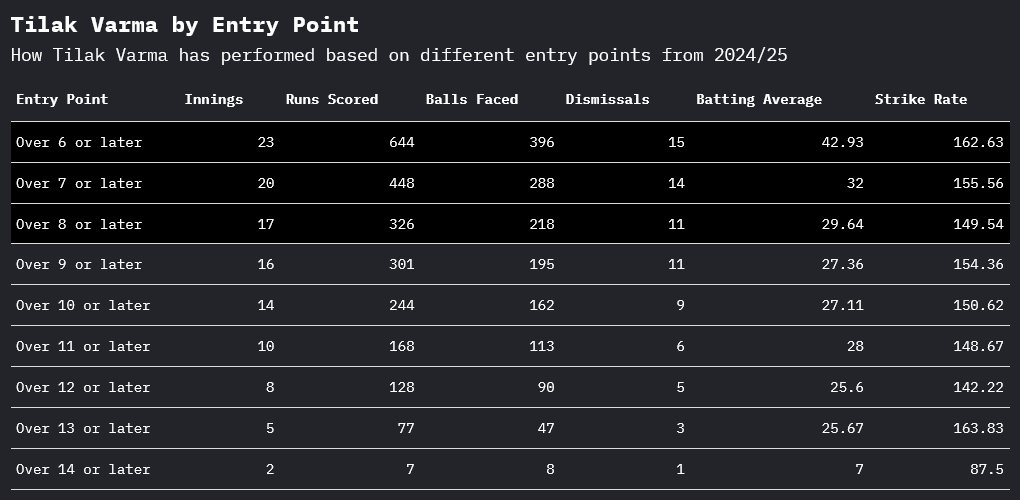
Tilak Varma. There’s two kinds of Tilak Varma you might have watched over the past three years. A version in 2024/25, where he asked for a promotion to three and ransacked two consecutive T20I hundreds against South Africa in South Africa.
The other one; a player who looks feeble against spin since 2026, but against pace, brutal like no other, finding gaps and power you could not imagine.

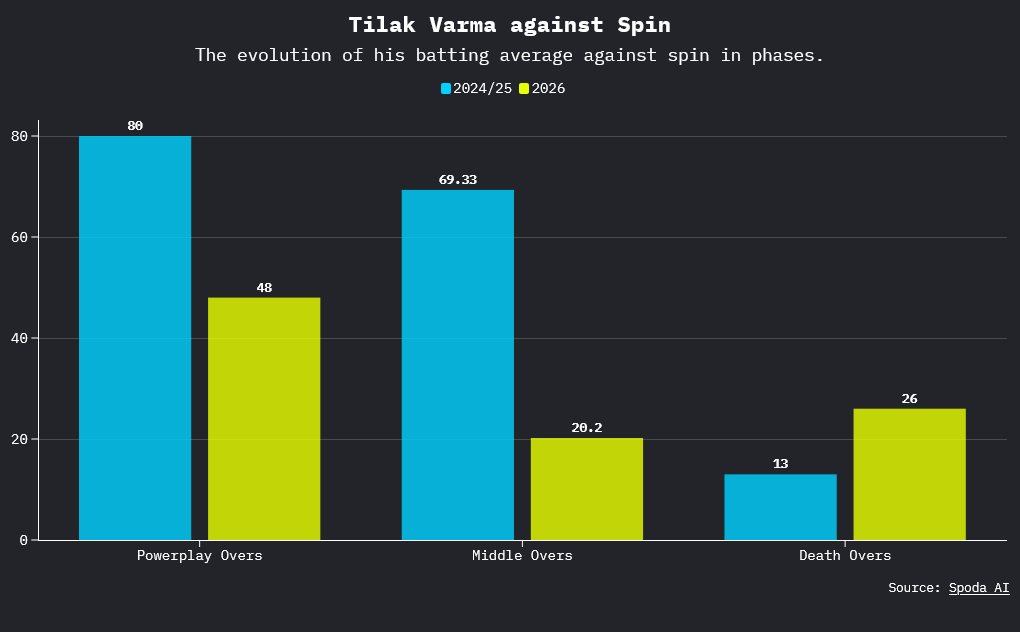
His numbers against spin have been a cause for great concern for India and for the Mumbai Indians in 2026, having forced both those teams to relegate him lower down the order.
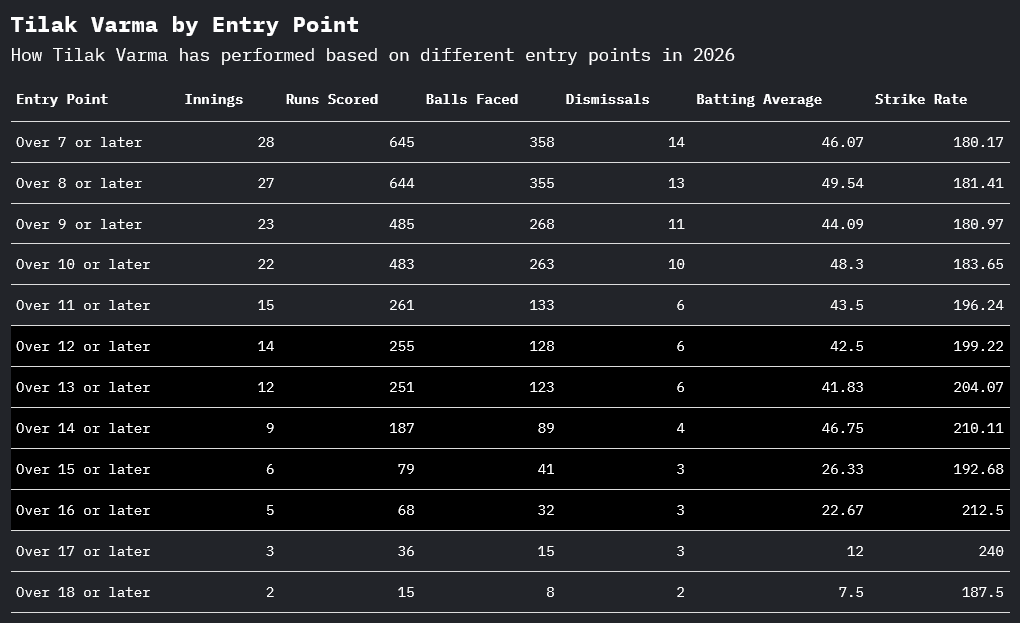
At the same time, he has managed to re-invent himself, having gone from batting well at 3/4 down to being an excellent number six, with his numbers against spin now flagging.
Difference based on Batting Position
The difference between positions is obvious, Varma has gone from preferring to bat three, where he averaged 70 and struck at 155.5, to ideally performing at six, striking at 197.6 where he has averaged 81.
The change in his preference has come down to his ability in being able to play the spinners, from being able to milk them easily and score consistently in the 2024/25 season, to struggling against them in 2026.
While his numbers against pace have improved significantly, having turned himself into an elite pace hitter.
The following pitch-maps illustrate the difference between his performances from 2024/25 to 2026.
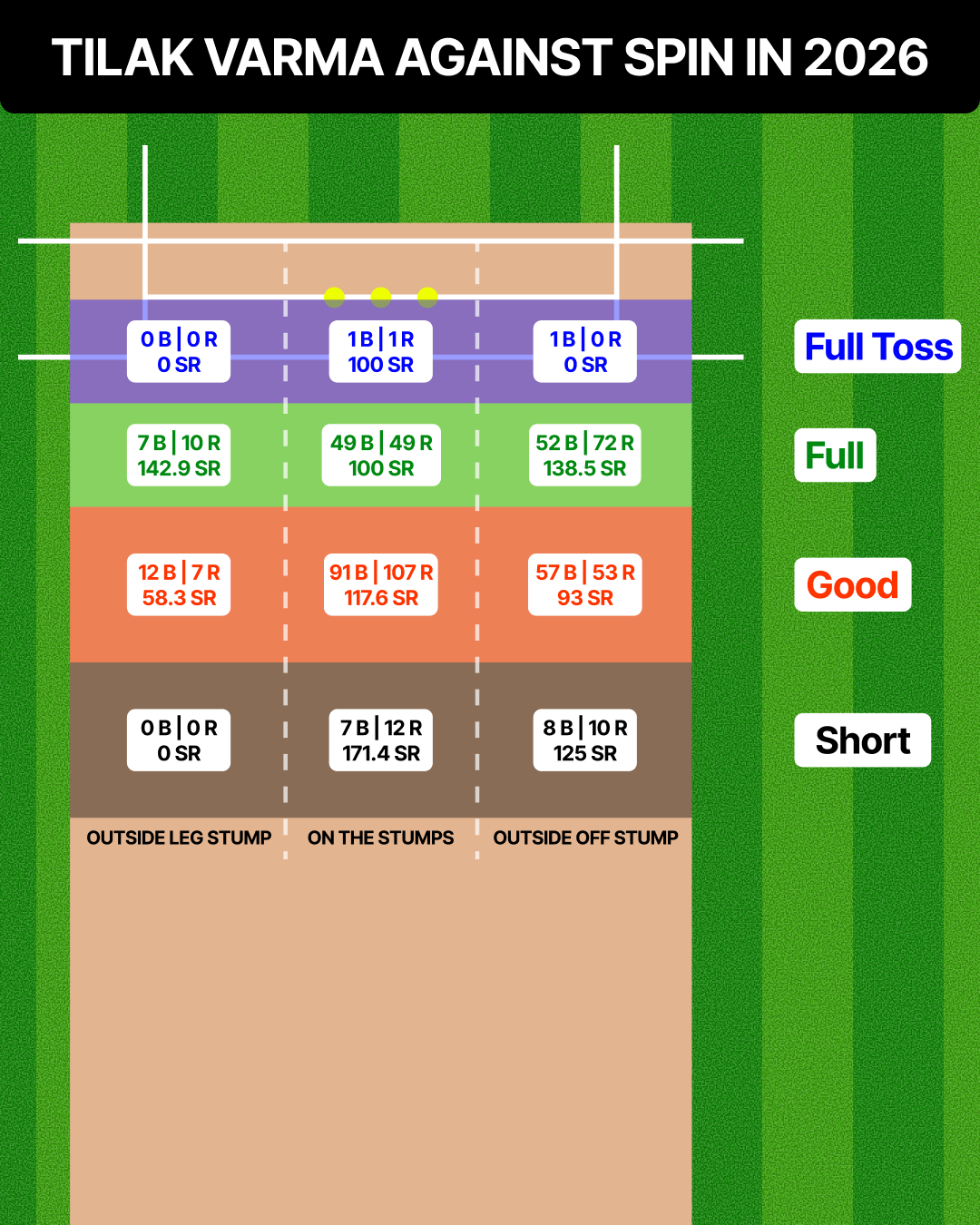
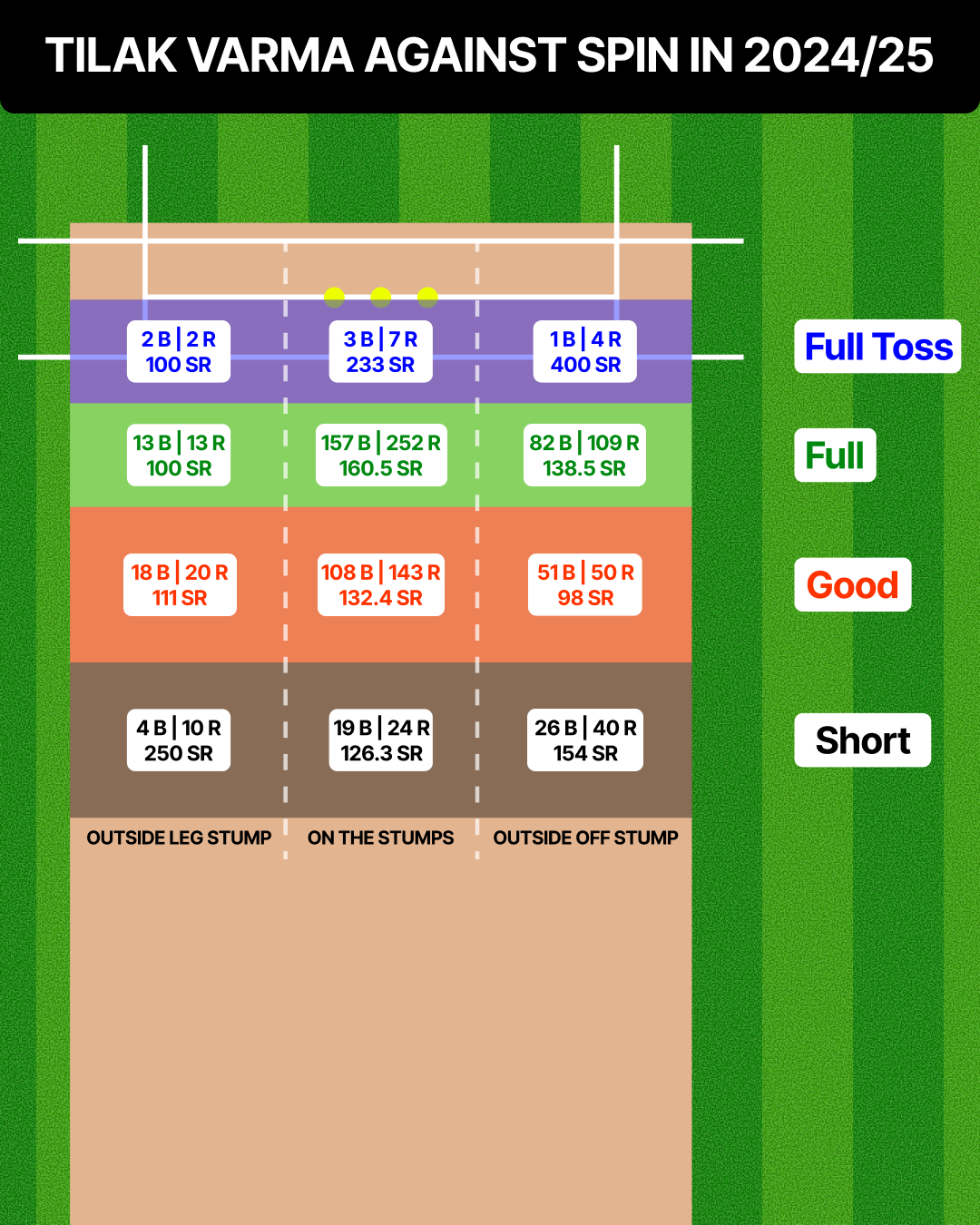
The largest paradigm shift in his ability against spin has been his ability to get under a ball, where he used to strike at 160.5 against balls pitched full on the stumps, the same numbers now sit at a strike rate of 100.
All in all, Tilak Varma had scored 426 runs against balls from spinners targeting the stumps at a strike rate of 148.4, which has fallen to 114.2 over the course of this year.
Another region of concern has been bowlers who have bowled at a good length, targeting his knee roll, a combined strike rate of 104.4 this year, while previously, this strike rate was 120.3.
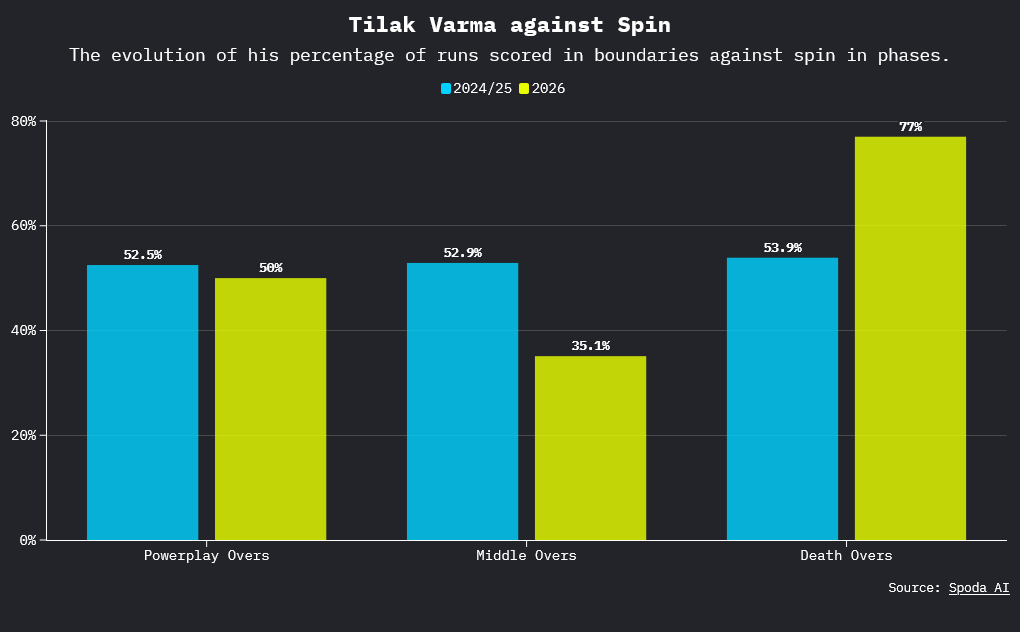
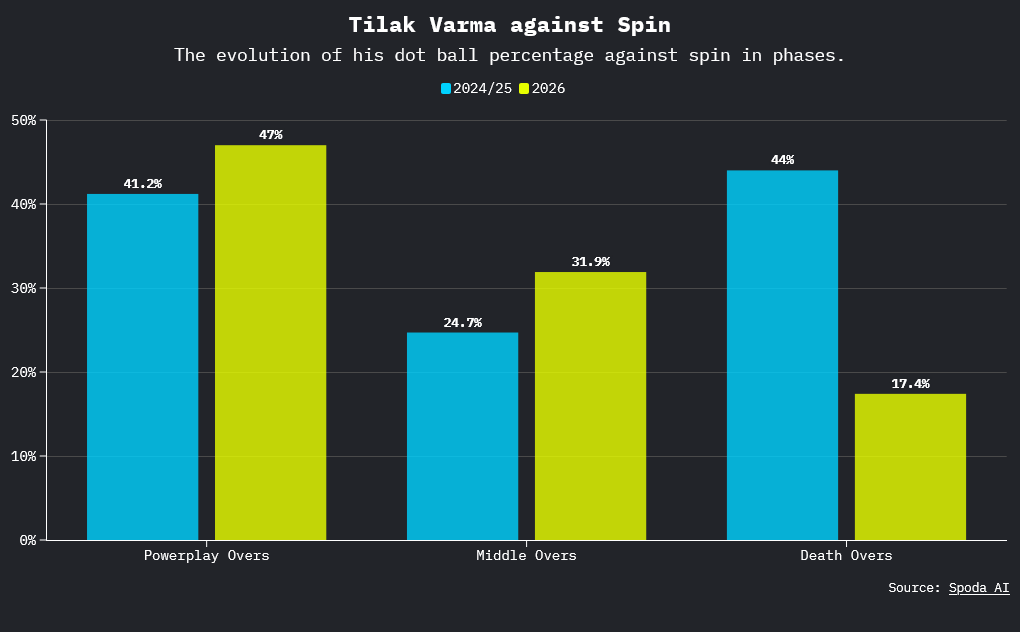
His ability to find the boundary has been a significant cause for concern against spin, with the percentage of dots faced in the middle overs having gone up from 25% in 2024/25, to 32% in 2026.
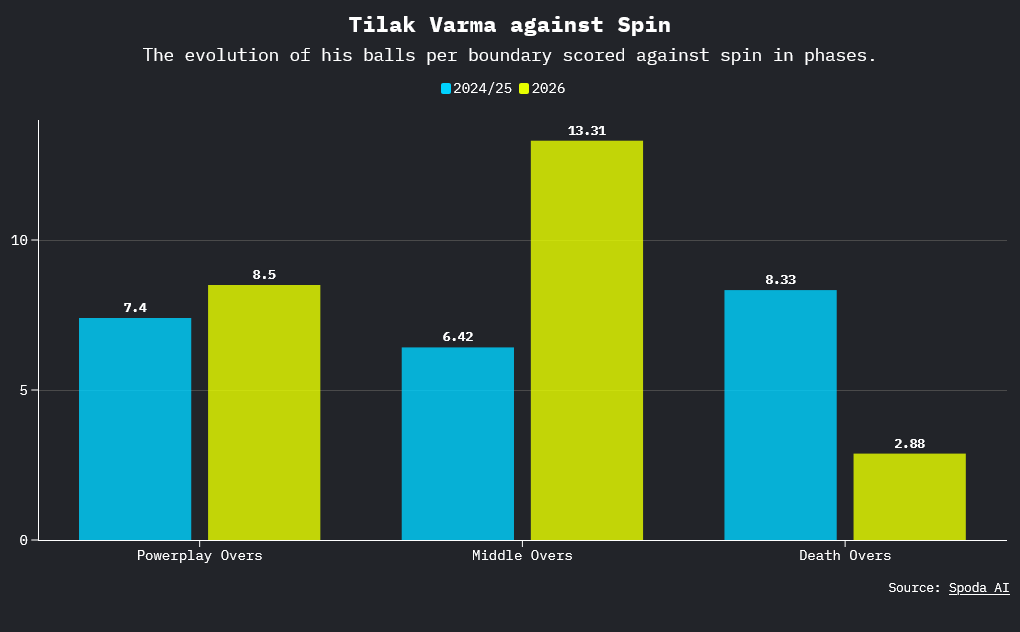
His balls per boundary found against spin in the middle overs has doubled too, having found the ropes once every 6.4 balls in 2024/25, now Tilak has required 13.3 balls per boundary.
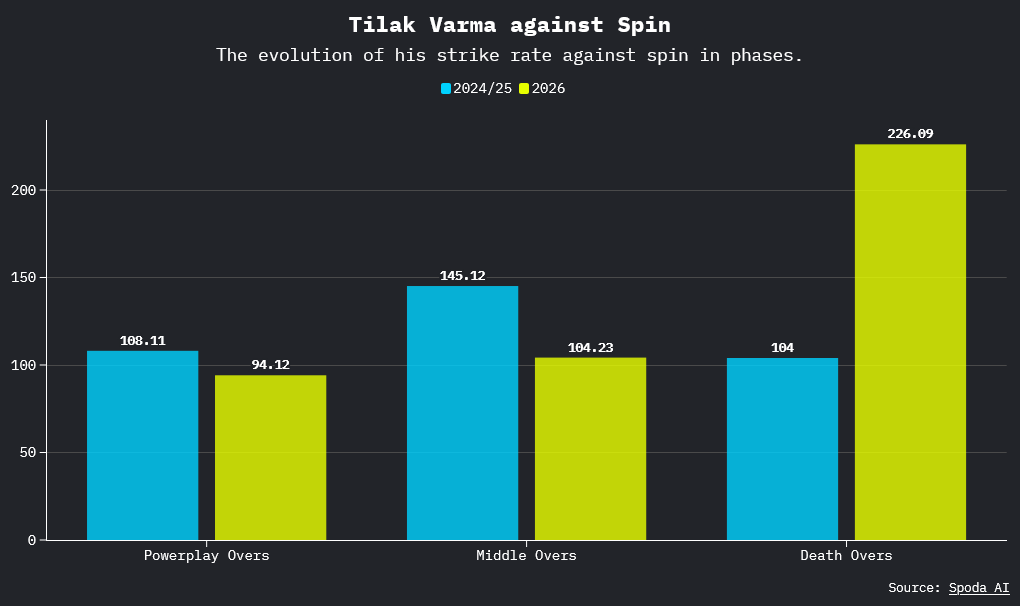
The evolution of his strike rate against spin has been the most damning evidence of his ability cap against the style of bowling having dropped.
Leave a Reply